
Running IoT in remote environments can be expensive. If you manage sensors on oil rigs, underground mines, or rural farmland, you already know the problem. Devices send massive amounts of data to the cloud over unstable satellite or cellular links that can cost 10 to 15 dollars per megabyte. At scale, this becomes one of the highest hidden costs in any remote operation.
A single site sending 1 GB of raw data per day can generate a monthly bill of more than 450,000 dollars. Even if your usage is far smaller, the economics do not scale and your IoT deployments can become too expensive and unreliable.
Why Cloud Alone Falls Short in Remote Operations
Cloud platforms like TagoIO are essential for centralized dashboards, analytics, storage, automations, and collaboration across teams. But in remote and harsh environments, cloud alone can’t handle everything your operation needs in real time.
It’s not that the cloud fails, it’s that remote operations require decisions that happen instantly, even when connectivity does not. When every action depends on sending data off-site, you experience issues that impact both safety and cost.
You face:
-
High data transmission costs
-
Delayed reactions due to latency
-
Frequent dropouts that interrupt operations
-
Compliance requirements that demand local processing
The cloud remains critical for strategy and visibility. But your field devices need something else to operate safely, efficiently, and cost-effectively.
The Secret Weapon for IoT in Remote Areas: Edge Computing
Edge computing gives your devices the ability to act in real time, processing data at the source instead of waiting for a remote server. When a temperature sensor detects a dangerous heat spike, it triggers cooling immediately. When a methane sensor detects risk, it sounds the alarm right away. When vibration data indicates bearing failure, the system prevents a shutdown instead of reacting to one.
And the financial impact is direct. Processing 100 GB of raw data locally and sending only 100 MB of insights reduces transmission costs by more than 99%. Multiply that by every field site and the savings become dramatic.
How to Know if You Need Edge Computing Right Now
Here is a simple checklist. If you say yes to three or more, your operation is losing money today.
-
Your monthly connectivity bill keeps rising
-
You send raw or high-frequency data directly to the cloud
-
You buffer data during outages
-
Safety alerts take more than one second to arrive
-
Connectivity varies throughout the day
-
You operate in areas with regulatory requirements for on-site data
If this sounds familiar, edge processing will generate immediate ROI.
Where IoT Platforms Strengthen Edge Computing
For teams exploring edge processing, platforms like TagoCore offer a practical way to run logic directly at the source. This lightweight, open-source engine can run on small devices or existing industrial gateways, enabling data to be processed, filtered, or stored locally before it reaches the cloud. When connectivity becomes available, systems using TagoCore synchronize with TagoIO so dashboards and analytics stay current without relying on continuous high-bandwidth transmission.
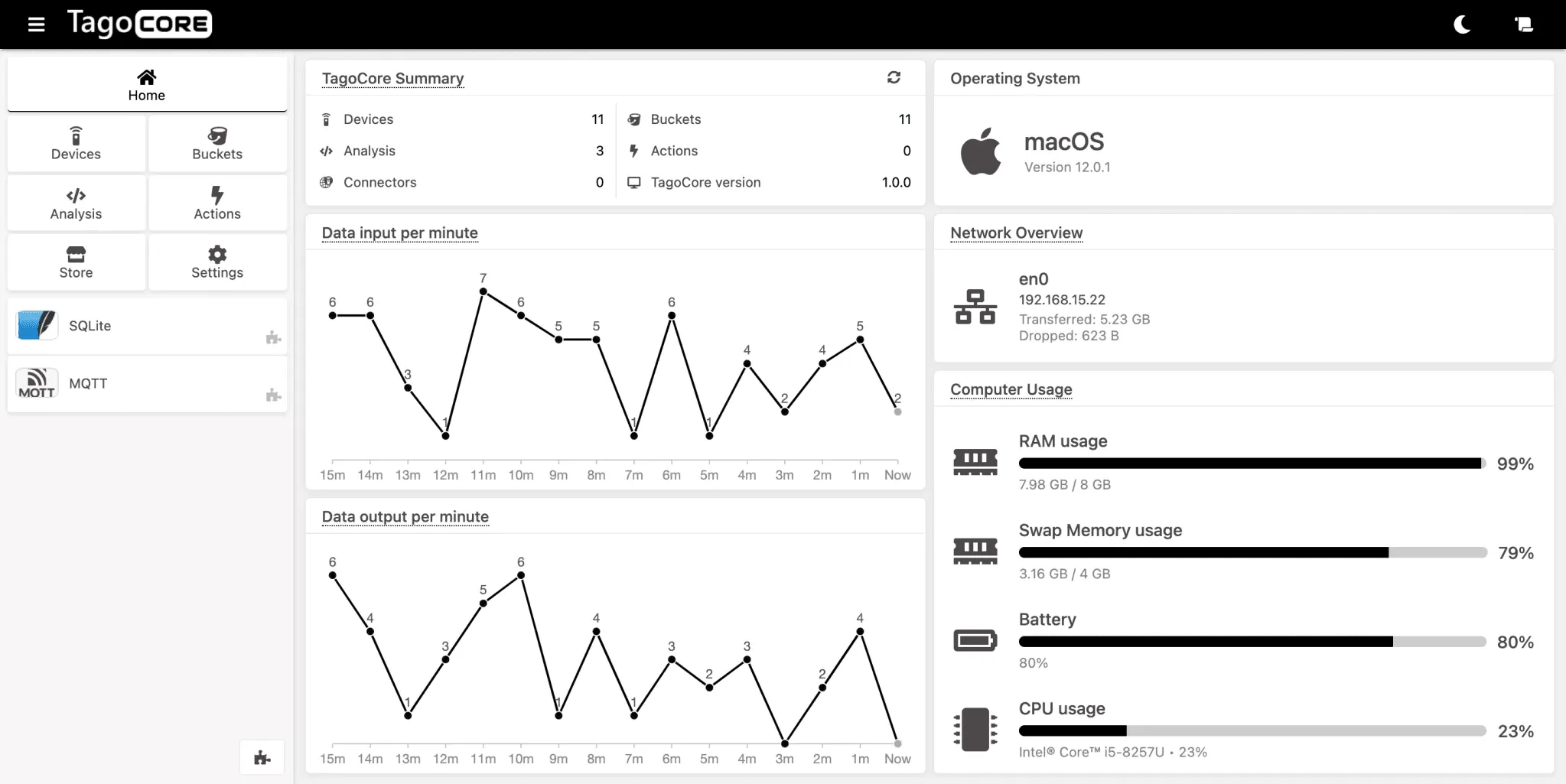
This approach is especially useful in remote environments where bandwidth is limited or intermittent. By handling high-frequency or raw data on-site, TagoCore helps reduce what needs to be transmitted while keeping essential operations running even during network interruptions.
Curious about how TagoCore works in real-world scenarios? Watch our recorded webinar “Deploying IoT Applications on the Edge with TagoCore” and get a full walkthrough.
Why Edge and Cloud Together Create the Best IoT Architecture
Edge computing does not replace the cloud. It enhances it. The edge keeps your operation running, even when the network is unstable. The cloud gives you visibility across all sites, historical analytics, and AI models.
Use edge when speed, reliability, or cost control is essential. Use the cloud when your teams need dashboards, long-term storage, and wide visibility. Together they form a hybrid architecture that is resilient by design and efficient by default.