
What Exactly Is an IoT Portal?
An IoT portal is your centralized interface for managing, monitoring, and controlling all your connected devices and their data. Think of it as mission control for your IoT network, where raw sensor data transforms into actionable intelligence and where different stakeholders access exactly what they need, when they need it.
But here’s the critical part most companies miss: your IoT portal isn’t just for you. It’s the system your collaborators and customers will use every day. This is the face of your IoT solution. It’s what your field technicians will access from remote sites, what your customers will judge your service by, and what your partners will integrate into their workflows. You need it to be great, easy to use, and, crucially, you need full control over who accesses what, when, and how.
Why Companies Desperately Need IoT Portals
Here’s the reality: most companies deploy IoT solutions and quickly hit a wall. You’ve got sensors sending data, devices scattered across locations, and stakeholders asking questions you can’t easily answer. But the bigger challenge? Getting that data into the hands of end-users, your customers, partners, and distributed teams, in a way that’s secure, branded, and accessible.
Your operations team needs real-time visibility into equipment performance. Your international customers need the portal in their native language. Your enterprise clients demand single sign-on integration with their existing systems. Your security team requires multi-factor authentication and granular access controls. Your business model depends on serving multiple customers from one platform without any data leakage between them.
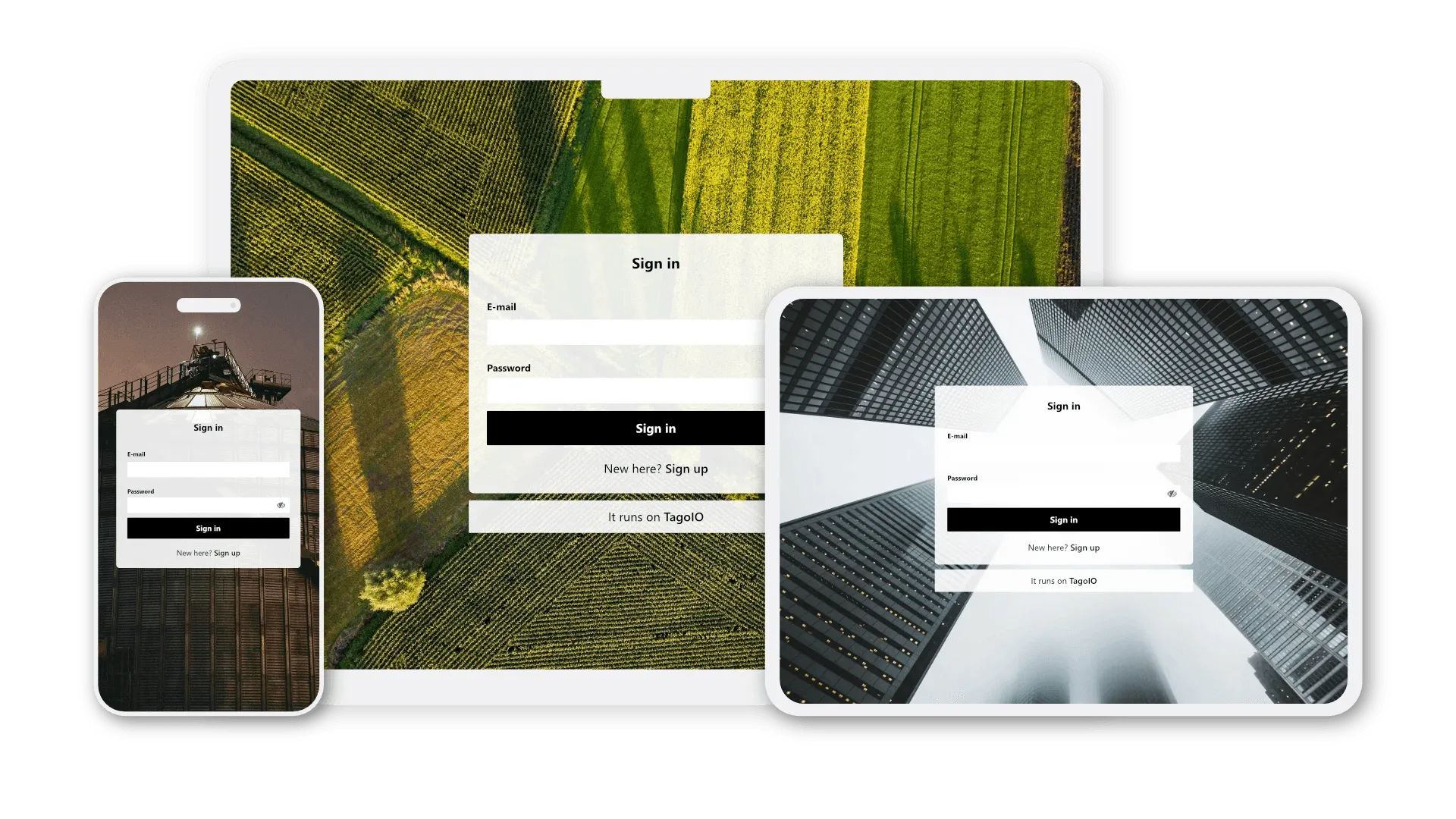
An IoT portal solves all of this by creating a structured, scalable way to expose your IoT data and functionality to the right people, in the right format, with the right security, at the right time.
Why Building Your Own Portal Is a Trap Most Companies Can’t Escape
“We’ll just build it ourselves on AWS” or “Azure has all the pieces we need”, if you’ve heard this from your engineering team, you’re about to discover why most IoT portal projects become multi-year development nightmares.
The deceptive simplicity of cloud infrastructure
Yes, AWS and Azure provide the building blocks: databases, authentication services, hosting, and APIs. But here’s what they don’t provide: a coherent system that combines all these pieces into a production-ready portal your end-users can actually use. You’re not buying a solution; you’re buying construction materials and a very expensive learning curve.
The frontend-backend complexity multiplier
Building an IoT portal isn’t a backend problem or a frontend problem: it’s both simultaneously, and they multiply each other’s complexity. Your backend needs to handle real-time data streams from thousands of devices, maintain multi-tenant data isolation, manage complex authentication flows, enforce granular permissions, and scale elastically. Your frontend needs to render live data smoothly, work across devices and browsers, provide intuitive UX for non-technical users, support multiple languages, and maintain responsiveness under load.
Each of these requirements is substantial on its own. Together, they create an exponential complexity problem that quickly overwhelms even experienced development teams.
The hidden costs nobody warns you about
Here are real numbers. Building a production-grade IoT portal from scratch typically requires:
A dedicated development team (minimum 3-5 full-stack developers) for 12-18 months just to reach MVP. Based on industry-standard developer salaries and infrastructure costs, this easily translates to $500K-$1M in development costs before you’ve onboarded your first customer. Then come the ongoing costs: DevOps engineers to maintain infrastructure, security specialists to handle compliance and vulnerabilities, frontend developers to iterate on UI/UX based on user feedback, and backend engineers to optimize performance as data volumes grow.
The feature trap
Here’s where it gets worse. You start building “just the basics”, some dashboards, user authentication, basic device management. Then reality hits. Customer A needs SSO integration. Customer B requires white-label branding. Your security team mandates 2FA. International expansion demands multi-language support. Each “simple” feature actually requires weeks or months of development, testing, and deployment.
Multi-tenancy alone, with complete data isolation between customers, is a massive architectural challenge. Get it wrong once, and you’ve got a catastrophic data breach. Role-based access control that actually mirrors real business hierarchies? That’s typically a 3-6 month project by itself. Real-time data synchronization across thousands of concurrent users without crushing your database? You’re now hiring specialists in WebSocket architecture and database optimization.
The UI/UX nightmare
Even if you nail the backend, your portal still needs to be something people actually want to use. Professional-grade UI/UX that works across desktop, tablet, and mobile requires specialized design and frontend expertise. Responsive layouts, intuitive navigation, accessible design, smooth animations, consistent branding: these aren’t nice-to-haves; they’re the baseline expectations of modern business users.
Most companies underestimate this by 10x. They budget for “some frontend work” and end up with clunky interfaces that users hate, leading to poor adoption, constant support tickets, and eventually a complete redesign.
The maintenance burden
Suppose you actually succeed in building version 1.0. Congratulations. You now own a complex software system that requires constant maintenance. Security patches, browser compatibility updates, cloud service migrations, performance optimization, bug fixes, and feature requests never stop. You have built a software product that competes with your actual IoT business for resources and attention.
The opportunity cost
Here’s the question nobody asks until it’s too late: while your team spends 18 months building authentication flows and dashboard widgets, what aren’t they building? Your actual IoT innovation. The unique algorithms, device integrations, and domain expertise that differentiate your business: those are delayed or abandoned because your developers are stuck implementing 2FA for the third time.
The Five Non-Negotiable Characteristics of a Great IoT Portal
1. Bulletproof multi-tenant architecture
If you’re serving multiple customers or managing separate business units, complete data isolation isn’t optional: it’s essential. Your portal must provide true multi-tenancy where each organization operates in its own secure environment. Customer A should never see Customer B’s devices, data, or users, even though they’re on the same platform. This requires sophisticated tenant management, isolated databases or partitions, and foolproof access boundaries that work automatically, not through careful configuration.
2. Enterprise-grade security and authentication
Modern businesses don’t accept username-and-password as sufficient security. Your portal needs two-factor authentication (2FA) as a baseline, supporting authenticator apps, SMS codes, and hardware tokens. For enterprise customers, Single Sign-On (SSO) integration is non-negotiable: they want their teams accessing your portal through their existing identity providers like Azure AD, Okta, or Google Workspace. No separate credentials, no additional password management, just direct integration with their security infrastructure.
3. Granular access control that actually works
Not everyone needs to see everything, and managing who sees what shouldn’t require a PhD. Your portal must handle complex permission hierarchies across multiple dimensions: user roles, device groups, data types, geographic locations, and organizational units. A field technician in Mexico needs different access than a facility manager in Germany, who needs different access than your customer’s executive dashboard viewer. This control needs to be flexible enough to match real business structures but simple enough that administrators can configure it without developer support.
4. True white-label capabilities
If you’re delivering IoT solutions to customers, generic branding kills your credibility. Your portal needs complete white-label transformation: custom domains (customer.com, not customer.yourplatform.com), full brand theming with logos and color schemes, customized email templates, and even branded mobile apps. Each customer should experience the portal as if it were built exclusively for them. This isn’t cosmetic; it’s about delivering professional solutions that reinforce your customer’s brand to their end-users.
5. Multi-language support for global operations
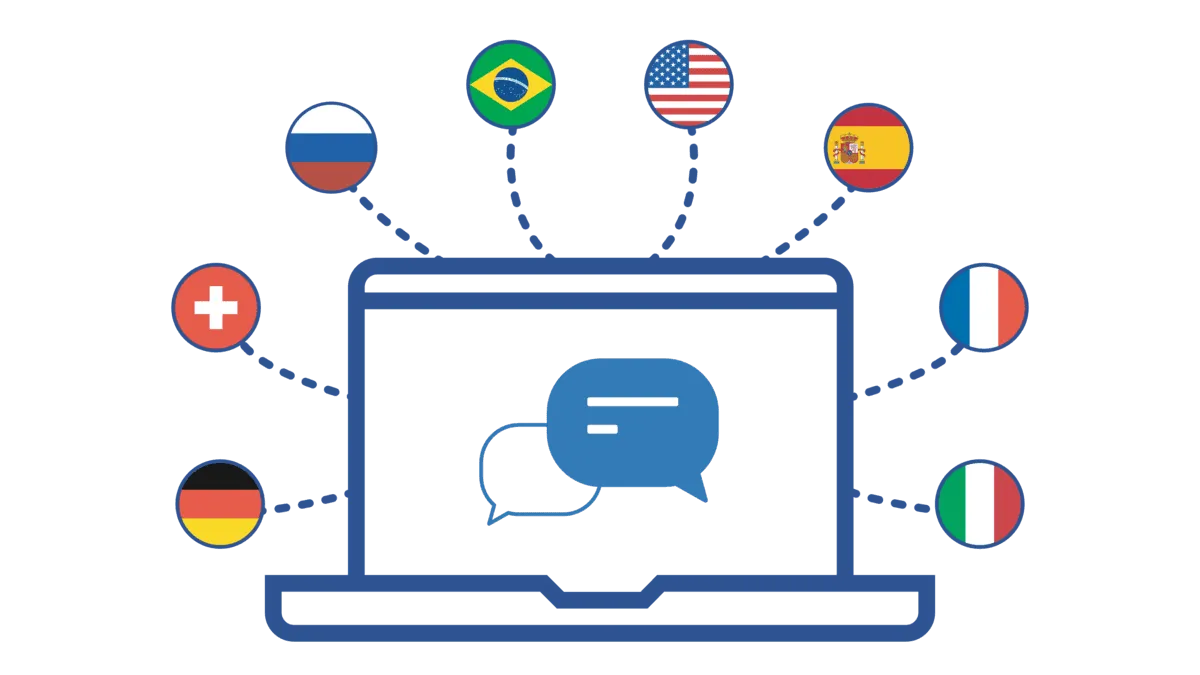
IoT deployments don’t respect borders. Your portal needs native multi-language support that goes beyond simple text translation. Interface elements, date formats, number formatting, time zones, and even right-to-left language support for markets like the Middle East. Users should be able to switch languages instantly, and administrators should be able to manage translations without redeploying the entire application. When your Canadian agricultural customers, German industrial clients, and Japanese logistics partners all use the same platform, language flexibility becomes a competitive advantage.
How TagoIO’s RUN Makes This Simple
TagoRUN was built specifically to solve the end-user access challenge that most IoT platforms ignore. Where traditional approaches force you to choose between building everything custom or accepting rigid, insecure templates, TagoRUN delivers enterprise-grade user management out of the box.
Multi-tenancy that just works
TagoRUN provides true multi-tenant architecture from day one. Create separate organizations, assign dedicated administrators, maintain complete data isolation, and manage everything from a single instance.
Security without compromise
Every TagoRUN portal comes with 2FA enabled and ready to deploy. Users can secure their accounts with authenticator apps or SMS verification immediately. It supports SSO integration with major identity providers, allowing authentication through existing corporate credentials. Your customers’ IT departments can enforce their security policies, manage user lifecycles, and maintain compliance, while their teams access your IoT portal as naturally as they access their email.
Access control that mirrors your business
TagoRUN’s role-based access control system is built for real-world complexity. Create custom roles, assign granular permissions, group devices and users however makes sense for your business, and define access rules that match your operational structure. A facility manager sees their buildings, a regional director sees their territory, and executives see aggregated data across the entire organization.
White-label without limitations
Deploy TagoRUN portals under your customers’ domains with complete brand customization. Custom logos, color schemes, fonts, and UI elements make each portal feel native to your customer’s brand. Email notifications, login screens, dashboards, and mobile experiences all carry your customer’s identity. You maintain one platform; your customers experience dozens of unique, branded applications.
Global by default
TagoRUN supports multiple languages natively, with users able to switch between them instantly. The interface adapts automatically to local formats for dates, numbers, and times. Adding new languages is simple, and translations are managed centrally without code changes.
End-user facilities that eliminate support tickets
TagoRUN puts self-service capabilities in end-users’ hands. Users can manage their own profiles, reset passwords securely, configure their own notification preferences, and customize their dashboard views, all without administrator intervention. This drastically reduces your support burden while giving users the control they expect from modern applications.
The Bottom Line
An IoT portal isn’t just about displaying sensor data, it’s about getting that data securely into the hands of the people who need it, whether they’re your employees, your customers, or your partners distributed across the globe. The companies winning with IoT aren’t necessarily the ones with the most sensors. They’re the ones who’ve made their IoT data accessible, secure, and valuable to every stakeholder who needs it.
TagoRUN removes the traditional barriers between IoT deployment and IoT value by solving the hardest problem: end-user access at scale. Enterprise-grade security, true multi-tenancy, white-label branding, global language support, and sophisticated access control, all working together out of the box, not after months of custom development.
Because at the end of the day, your IoT devices are only as valuable as your ability to get their insights to the right people, securely and professionally.