
Logistics runs on assets you cannot always see. Trailers, containers, roll cages, and high-value pallets move between sites and partners, and every one that goes missing or sits idle is money. The pitch for IoT tracking is simple: put a tracker on the asset and always know where it is.
GPS trackers are commodity hardware now, so teams assume the job is done once the devices are on. The problem is that dots on a map are not asset management. Knowing where 2,000 trailers are right now, in a list, does not tell you which ones are late, which left their zone, which are running warm, or which have not moved in a week. A real tracking system turns location into decisions. Here is what that includes.
The trackers, and the trade-offs
Not every asset needs the same device. The choice trades battery life against update frequency and cost.
- GPS plus cellular gives frequent, accurate location for assets that move far and need near-real-time tracking. Higher power draw and data cost.
- LoRaWAN trackers sip power and run for years, good for assets that move within range of your network or report less often.
- Hybrid trackers switch between cellular, LoRaWAN, and sometimes satellite depending on where the asset is.
Match the tracker to the route. A trailer crossing the country and a cage circulating inside one depot are different problems.
Geofencing and alerts
Location becomes useful when it has rules. Draw zones around depots, customer sites, and regions, and the system tells you when an asset enters or leaves. An asset that leaves its expected zone, or never arrives at the one it should, is the event you actually care about.
The alert has to reach the right person on the channel they watch, in time to act. A trailer leaving an unauthorized area at midnight is worth a phone notification, not a line in a morning report.
Condition, not just position
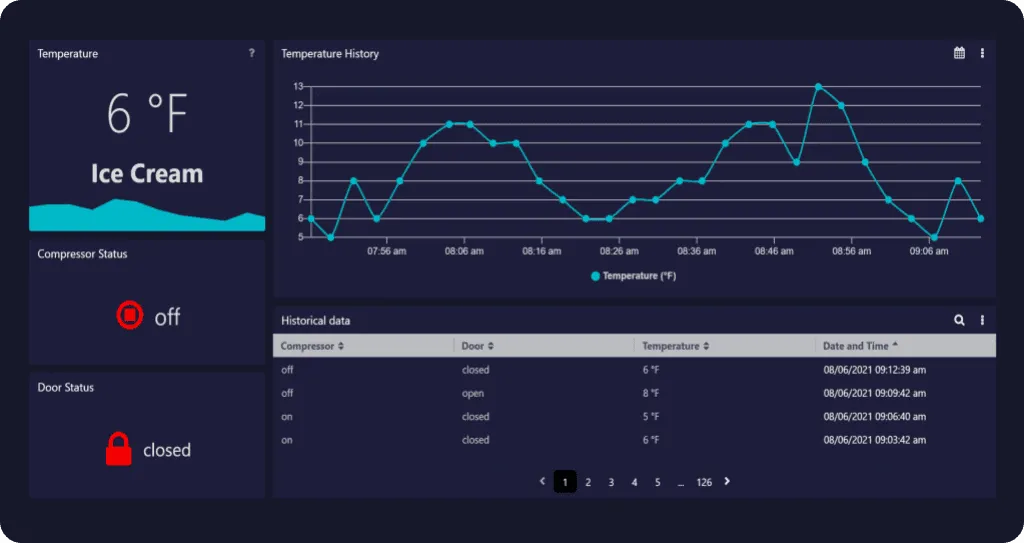
For many loads, where is only half the question. The other half is what state the goods are in. Temperature for perishables and pharma, shock and tilt for fragile or sensitive freight, door state for security. A tracker that also reports condition turns a location tool into a proof-of-care record.
The dashboard and the reports
Operations need a live view: every asset, its status, anything out of zone or out of range right now. The business needs reports: utilization, dwell time, idle assets, and route performance over weeks. The same data serves both, but the views are different. Build the live screen for the dispatcher and the report for the manager.
The reports often pay for the system on their own. Finding the trailers that sat idle for a month, or the routes where dwell time quietly grew, is where the savings hide.
Connectivity by route
A logistics network rarely fits one connectivity type. Assets inside a depot, on the road, and crossing borders need different links. The tracking system should accept all of them and present one view, so the dispatcher does not care whether a given update came over cellular, LoRaWAN, or satellite.
TagoIO sits at that layer: ingesting from mixed trackers and connectivity, holding the history, running geofence and condition rules, sending alerts to the right person, and feeding both the live operations screen and the management reports. The fleet stays in one place even when the connectivity does not.
See a tracking view on the free plan, or book a demo to map it to your routes and asset types.