
The Internet of Things generates an extraordinary volume of data: billions of sensor readings, device events, and telemetry streams flowing every second from connected infrastructure around the world. But raw data alone doesn’t solve problems. It takes intelligence to turn signals into decisions, and that’s exactly where artificial intelligence is reshaping IoT.
The Rise of AIoT
The convergence of AI and IoT, commonly referred to as AIoT, represents one of the most significant shifts in how we build, operate, and scale connected systems. Rather than treating AI as an afterthought or a separate analytics layer, AIoT weaves intelligence directly into the fabric of IoT platforms, from the edge device all the way to the cloud.
This isn’t just a branding exercise. The fusion changes what’s possible. Devices that once only reported data can now interpret it. Platforms that once only stored readings can now predict failures, detect anomalies, and recommend actions, all without requiring a data science team to build custom models for every use case.
The Many Facets of AI in IoT
AI touches IoT in several distinct ways, each unlocking a different kind of value:
Predictive Maintenance and Anomaly Detection. Machine learning models trained on historical sensor data can identify patterns that precede equipment failure. Instead of reacting to downtime, operators can intervene before it happens, saving costs and preventing cascading issues in critical infrastructure like water treatment, energy grids, and manufacturing lines.
Intelligent Data Parsing and Ingestion. IoT devices speak dozens of protocols and data formats. AI-assisted parsing can automatically interpret incoming payloads, map fields to the right variables, and flag inconsistencies, reducing the integration effort that has historically made IoT deployments slow and expensive.
Natural Language Interfaces. Rather than navigating complex configuration screens, operators and developers can describe what they want in plain language. AI translates intent into action: creating dashboards, querying devices, writing analysis scripts, or searching across thousands of resources.
Edge Intelligence. Running lightweight AI models directly on devices or gateways enables real-time decision-making without round-tripping to the cloud. This is essential for latency-sensitive applications like autonomous vehicles, industrial safety systems, and smart grid controls.
Continuous Optimization. AI doesn’t just detect problems. It can continuously tune system parameters, adjust thresholds based on seasonal patterns, and learn from operator feedback to improve recommendations over time.
How We See AI Value at TagoIO
At TagoIO, we believe AI in IoT should be more than a chatbot bolted onto the side of a platform. It should be embedded directly into your workflow, present at the moments where it actually saves time, reduces errors, and accelerates delivery.
Our approach to AI centers on two pillars:
1. Development: AI assists at every stage of building IoT solutions. It can auto-suggest dashboard layouts based on your device data, provide AI-assisted data parsing to speed up device integration, and offer contextual code suggestions when writing analysis scripts. The goal is to collapse the time between “I have a device” and “I have a working solution” from days to minutes.
2. Data Analysis: Once your solution is live, AI shifts to operational intelligence. Global Search lets you query your entire IoT infrastructure in natural language. Anomaly detection runs at scale across all your devices, flagging readings that fall outside expected ranges. And continuous optimization means the system learns and improves alongside your deployment.
This isn’t theoretical. It’s live in the TagoIO platform today, and the examples below show exactly how it works.
AI in Action: Real Examples from TagoIO
Dashboard Creation
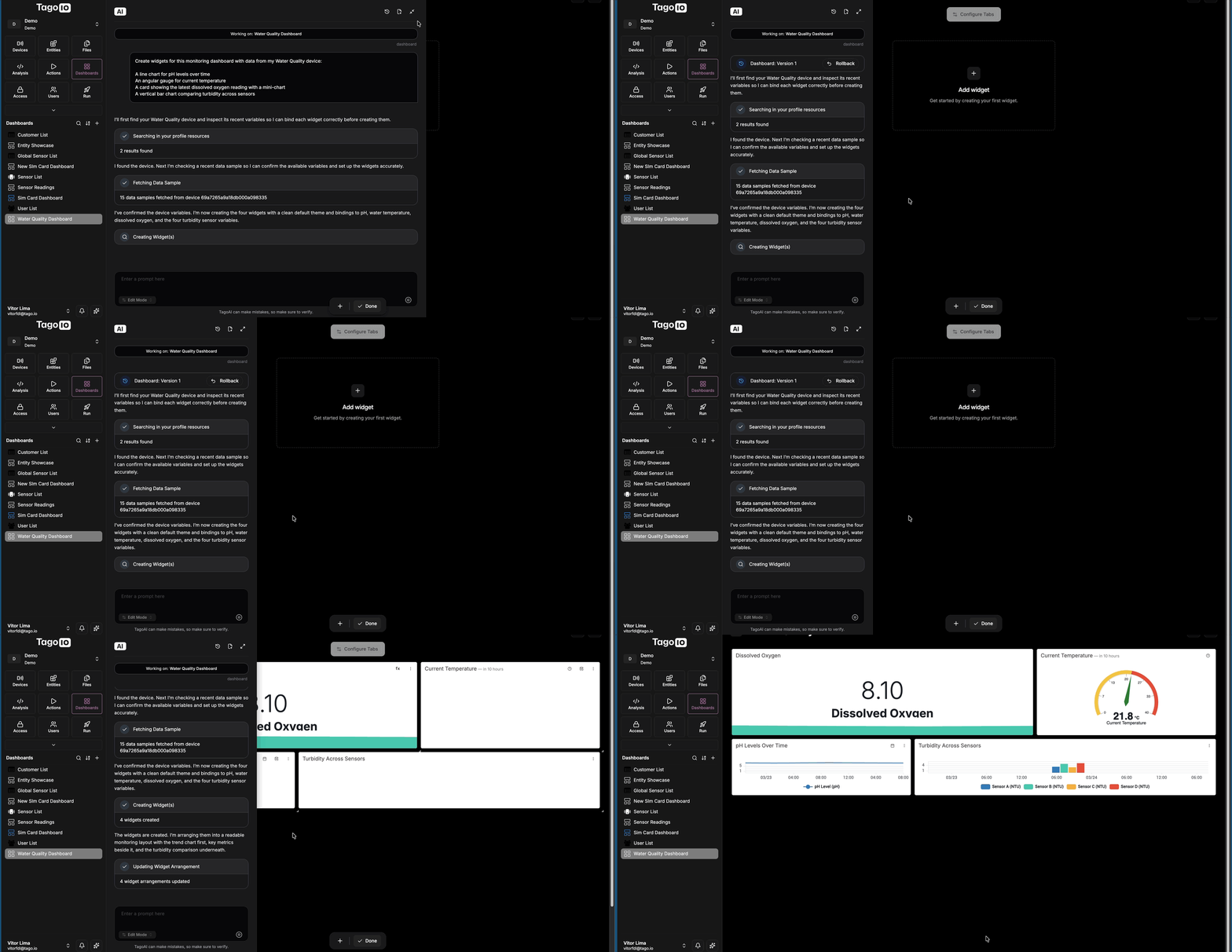
Building a monitoring dashboard used to mean manually configuring each widget: picking chart types, binding data variables, adjusting layouts. With TagoAI, you describe what you want in plain language:
“Create widgets for this monitoring dashboard with data from my Water Quality device: a line chart for pH levels over time, an angular gauge for current temperature, a card showing the latest dissolved oxygen reading with a mini-chart, and a vertical bar chart comparing turbidity across sensors.”
TagoAI finds your device, inspects its variables, and builds all four widgets, correctly bound to real data, in seconds.
Dashboard Edition
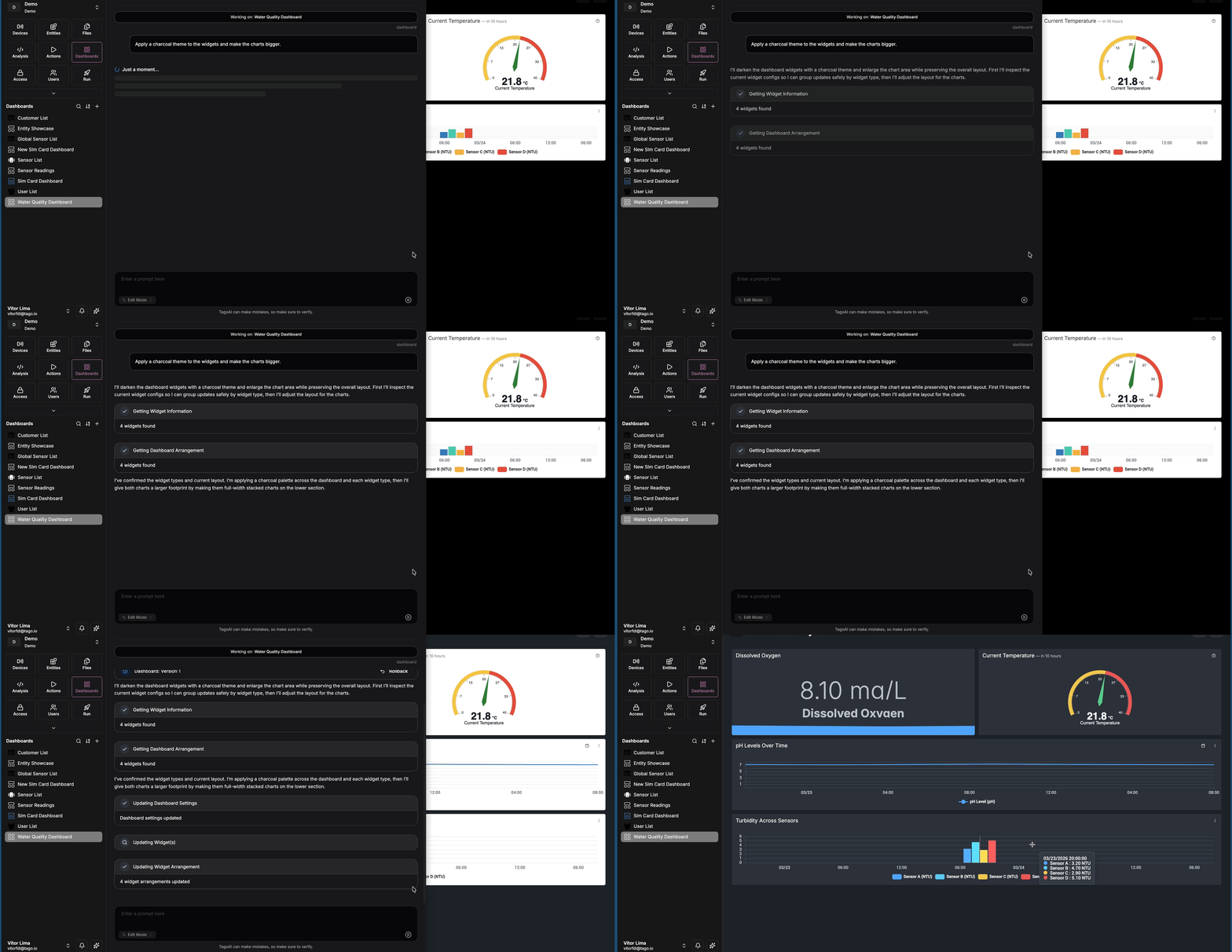
Already have a dashboard but want to refine it? Instead of clicking through settings menus, just tell TagoAI what to change:
“Apply a charcoal theme to the widgets and make the charts bigger.”
The AI understands the visual intent, updates widget styling across the board, and resizes the chart components, all from a single sentence.
Data Analysis
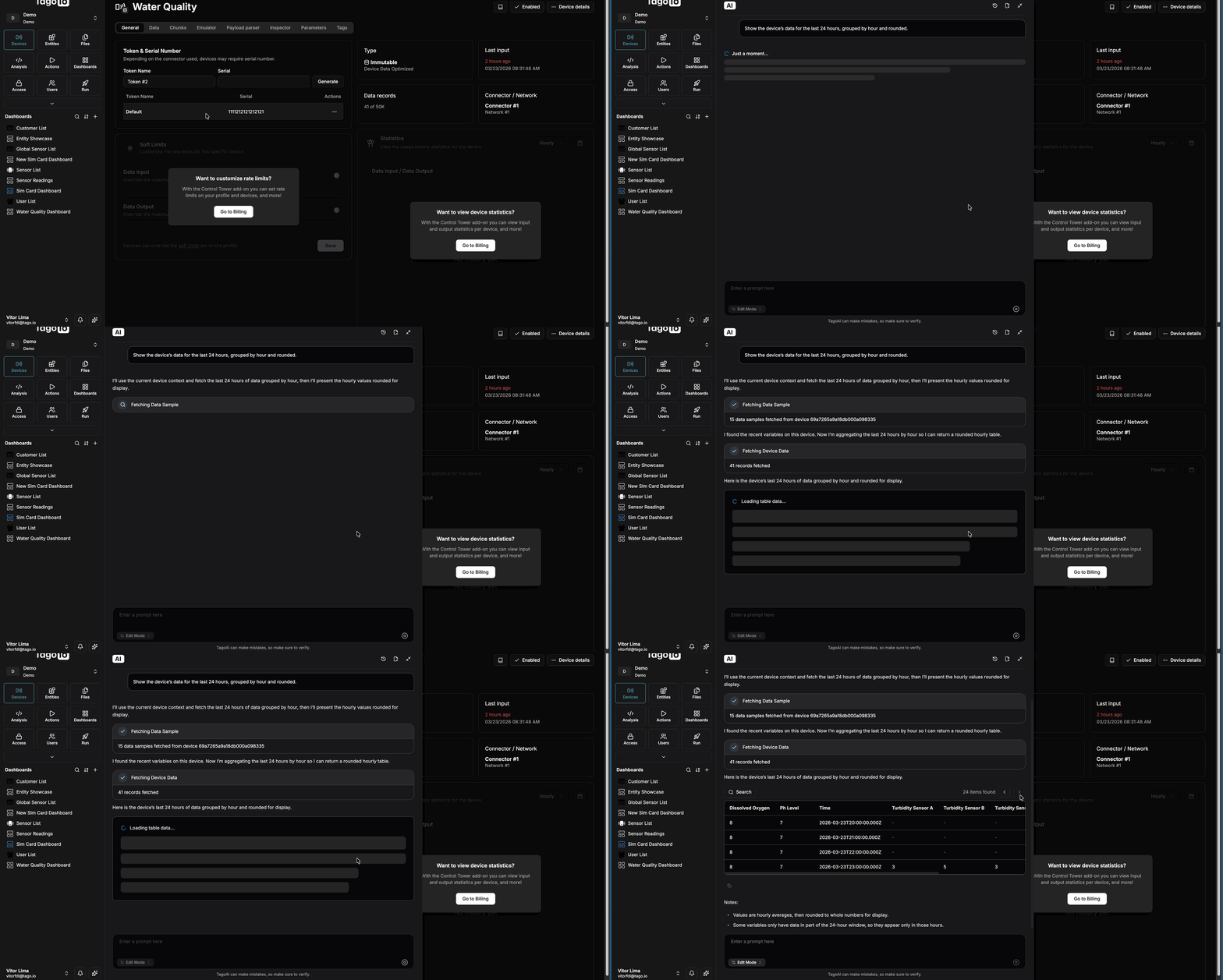
Investigating sensor behavior over time is one of the most common, and most tedious, tasks in IoT operations. TagoAI turns it into a conversation:
“Fetch the last 24 hours of ph_level and dissolved_oxygen. Identify any upward or downward trends and flag any hours where pH went outside the 7.0-7.3 range or dissolved oxygen dropped below 8.0 mg/L. Summarize the findings in plain language.”
The AI fetches the data, performs trend analysis, flags threshold violations with timestamps, and delivers a plain-language summary. No code, no spreadsheets, no manual review.
Global Search
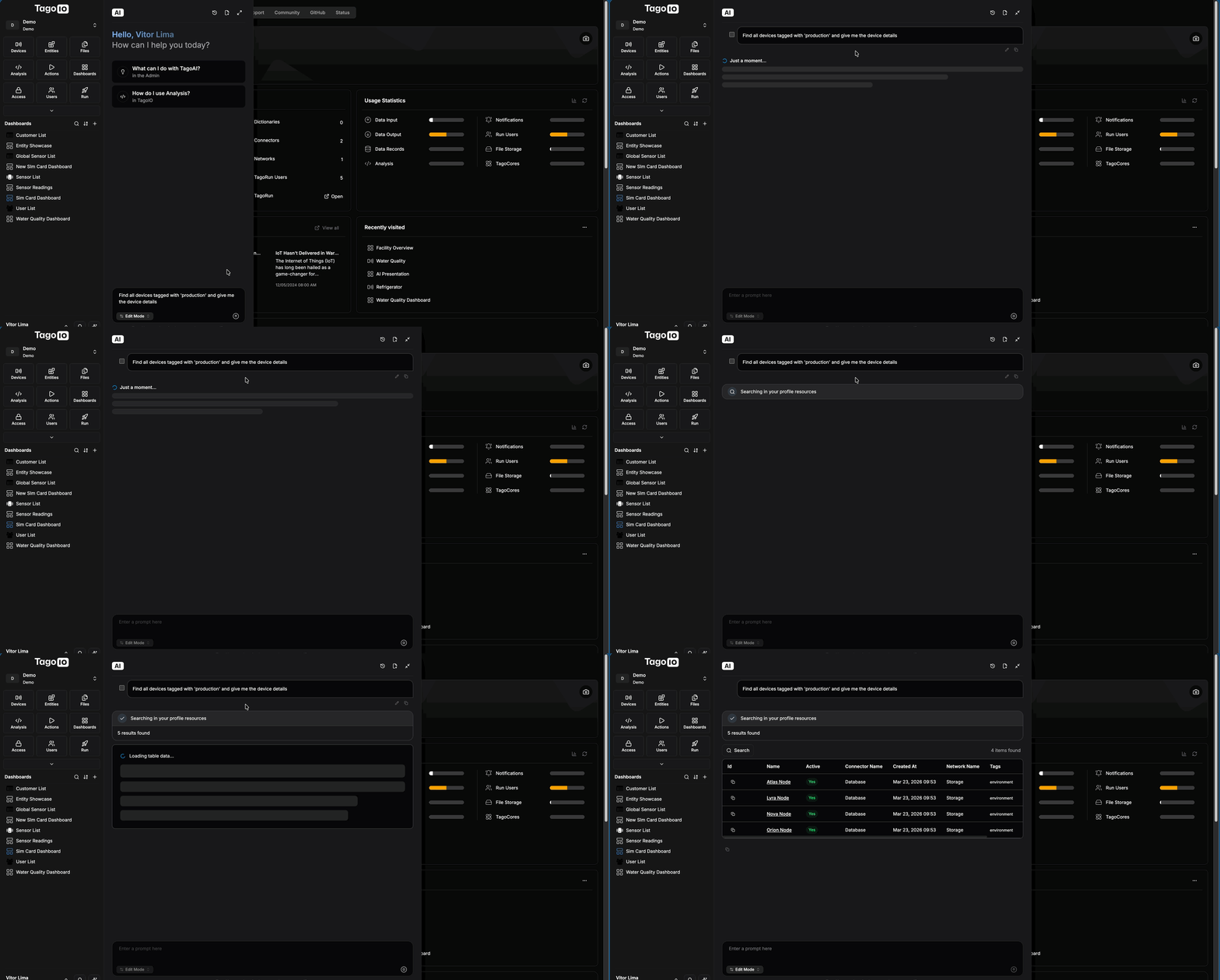
When you’re managing hundreds or thousands of devices, finding the right resource quickly is critical. TagoAI’s Global Search lets you query your entire infrastructure naturally:
“Find all devices tagged with ‘production’ and give me the device details.”
The AI searches across your profile, returns matching devices in a structured table with IDs, names, connector info, creation dates, and tags, all in seconds.
The Bottom Line
The IoT industry doesn’t need more dashboards with a chat window in the corner. It needs AI that understands IoT context: devices, variables, thresholds, time-series behavior, and acts on it within the workflow where engineers and operators already live.
That’s what AI Inside TagoIO means. Not a chatbot bolted on. Intelligence woven in.